
High-Capacity Dam Anchors: Precision Installation, Testing, and Long-Term Performance
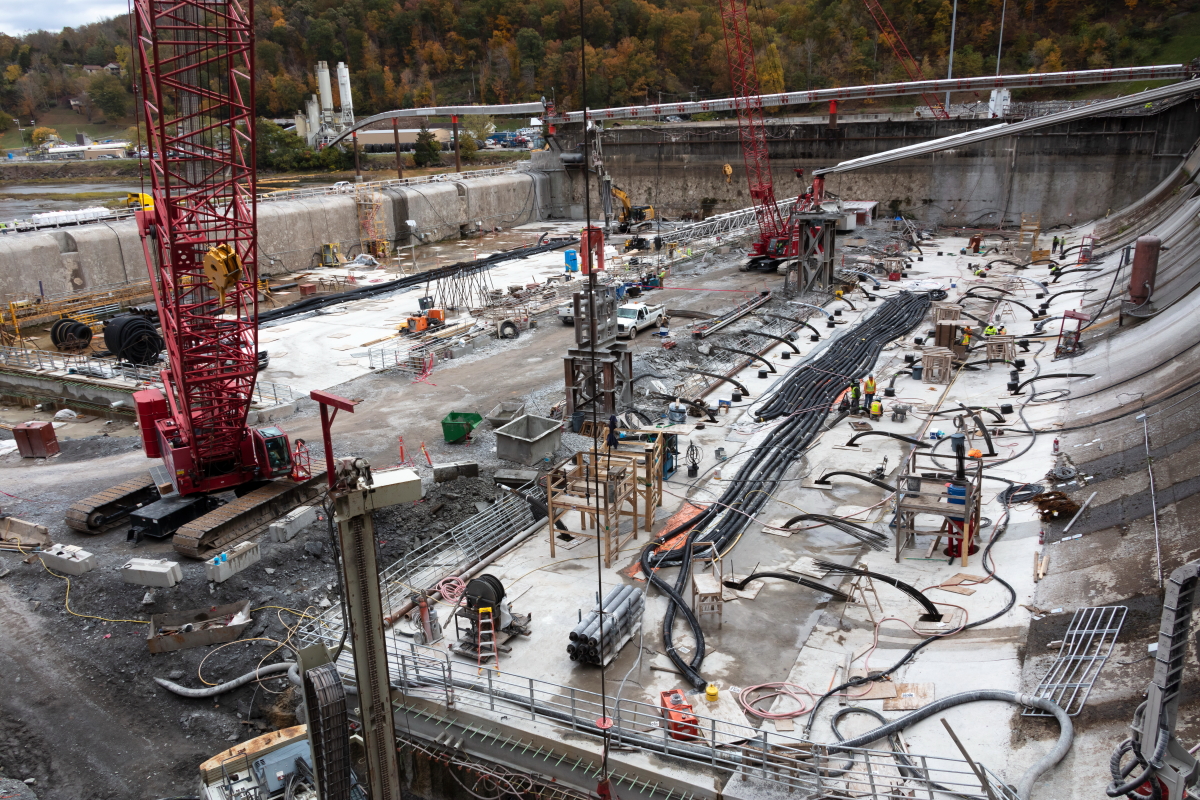
High-capacity dam anchors are more than large, post-tensioned systems. Their long-term performance depends on constructability planning, precision drilling, tendon installation, corrosion protection, grouting, stressing, testing, instrumentation, and quality control.
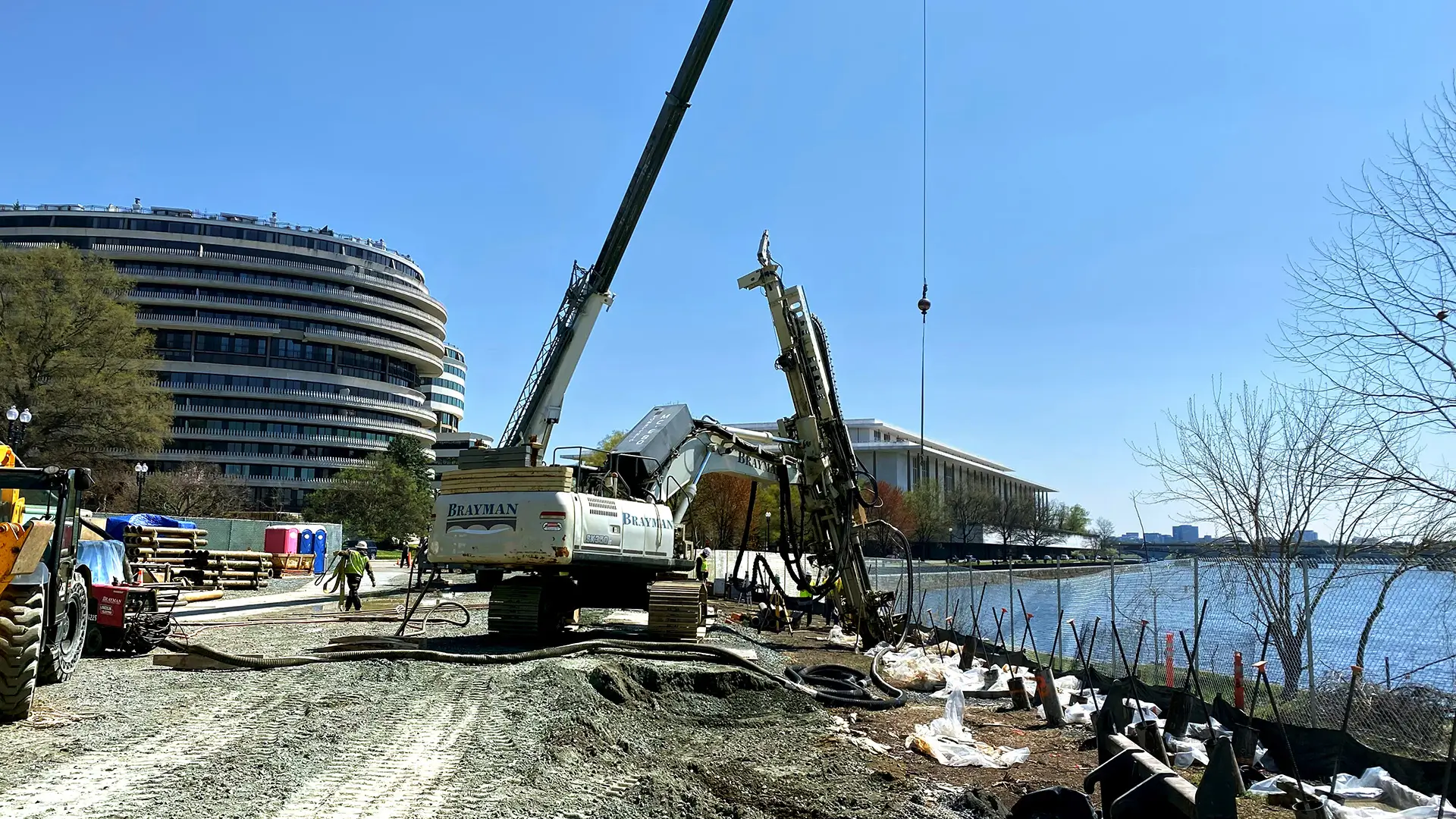
Brayman Construction brings decades of experience executing complex post-tensioned rock anchor programs for critical dam infrastructure. Through early contractor involvement, specialized equipment, self-performed installation, rigorous testing, and field-driven innovation, Brayman helps dam owners and engineers manage installation risk and verify that high-capacity anchor systems perform as intended.
From deep, closely spaced anchor installations requiring precise directional drilling to specialized stressing and long-term load-monitoring systems, Brayman brings the technical knowledge and field experience required to execute complex dam stabilization and rehabilitation projects successfully.
What are high-capacity dam anchors?
High-capacity dam anchors are used to increase the stability and load-carrying capacity of existing concrete structures by tying the structure into competent rock below. Depending on the structure and design conditions, high-capacity dam anchors may be used to improve resistance to sliding, overturning, uplift, or other forces that affect dam stability. With these anchor systems, steel strands are installed and used to secure the dam to bedrock, helping stabilize aging infrastructure and meet modern safety standards. After installation, the steel is tensioned, resulting in greater dam stability.
Because of the depths and loads involved, installation tolerances are extremely tight. Advanced instrumentation, including load cells, extensometers, and 3D downhole survey tools, are used to verify alignment, capacity, and long-term performance.
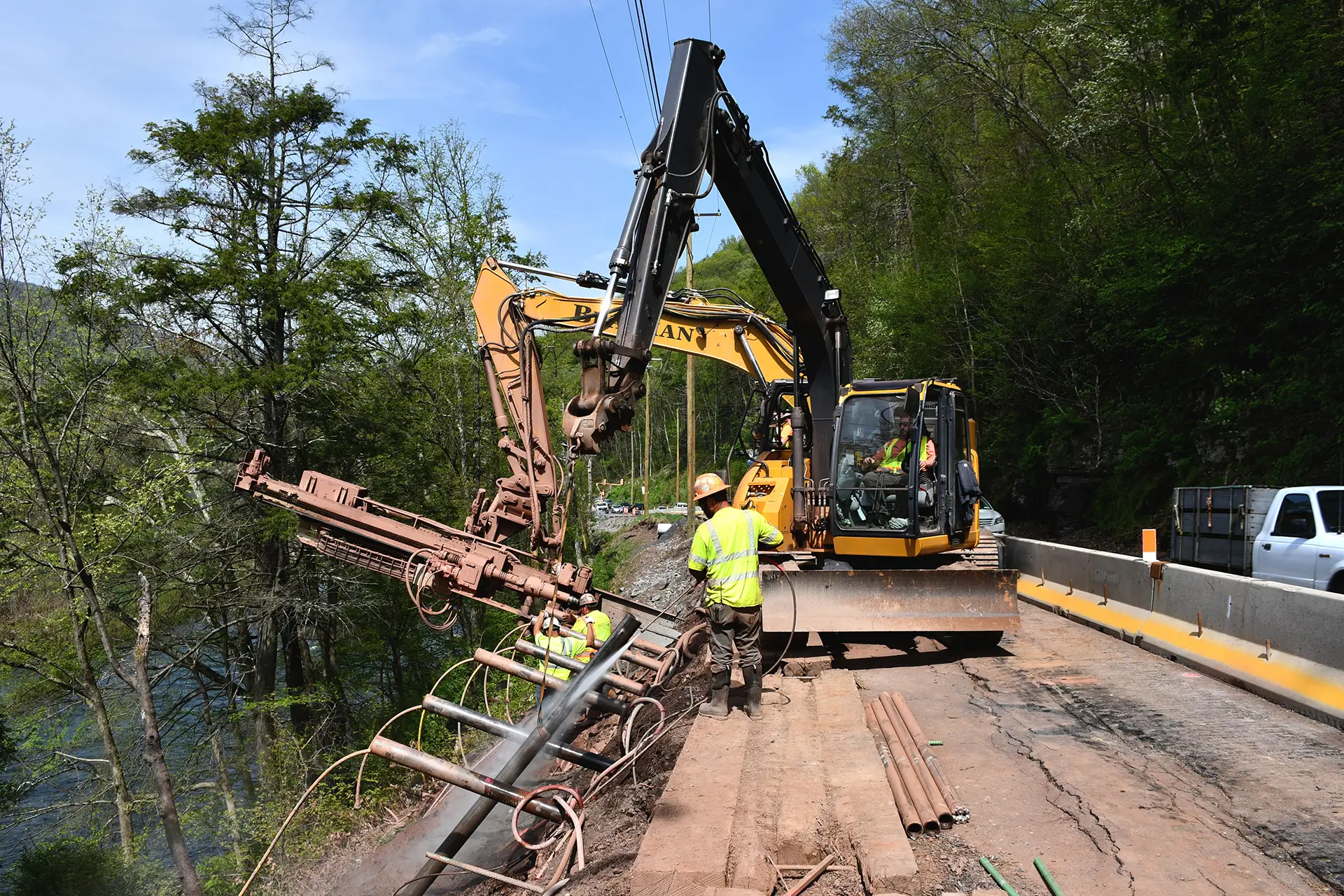
Since high-capacity dam anchors may extend hundreds of feet through existing concrete and rock while carrying loads measured in thousands of kips, successful installation requires precise drilling, verified alignment effective corrosion protection, controlled grouting and redrilling, calibrated stressing equipment, and rigorous performance testing.
Brayman’s capabilities include the ability to install high-capacity anchors to enhance dam stability and longevity. At the Chickamauga Lock and Dam in Chattanooga, TN, for example, Brayman installed anchors that were tested to 2,850 kips. Brayman’s experience on these large-scale projects demonstrates the ability to execute these highly specialized installations in what are typically tight jobsite constraints.
Success stories from the field
Our expertise is built on decades of hands-on experience delivering anchors to support dam safety programs. Each project requires a site-specific approach based on structural conditions, anchor geometry, access, subsurface conditions, existing features, installation tolerances, and long-term performance requirements.
Bluestone Dam
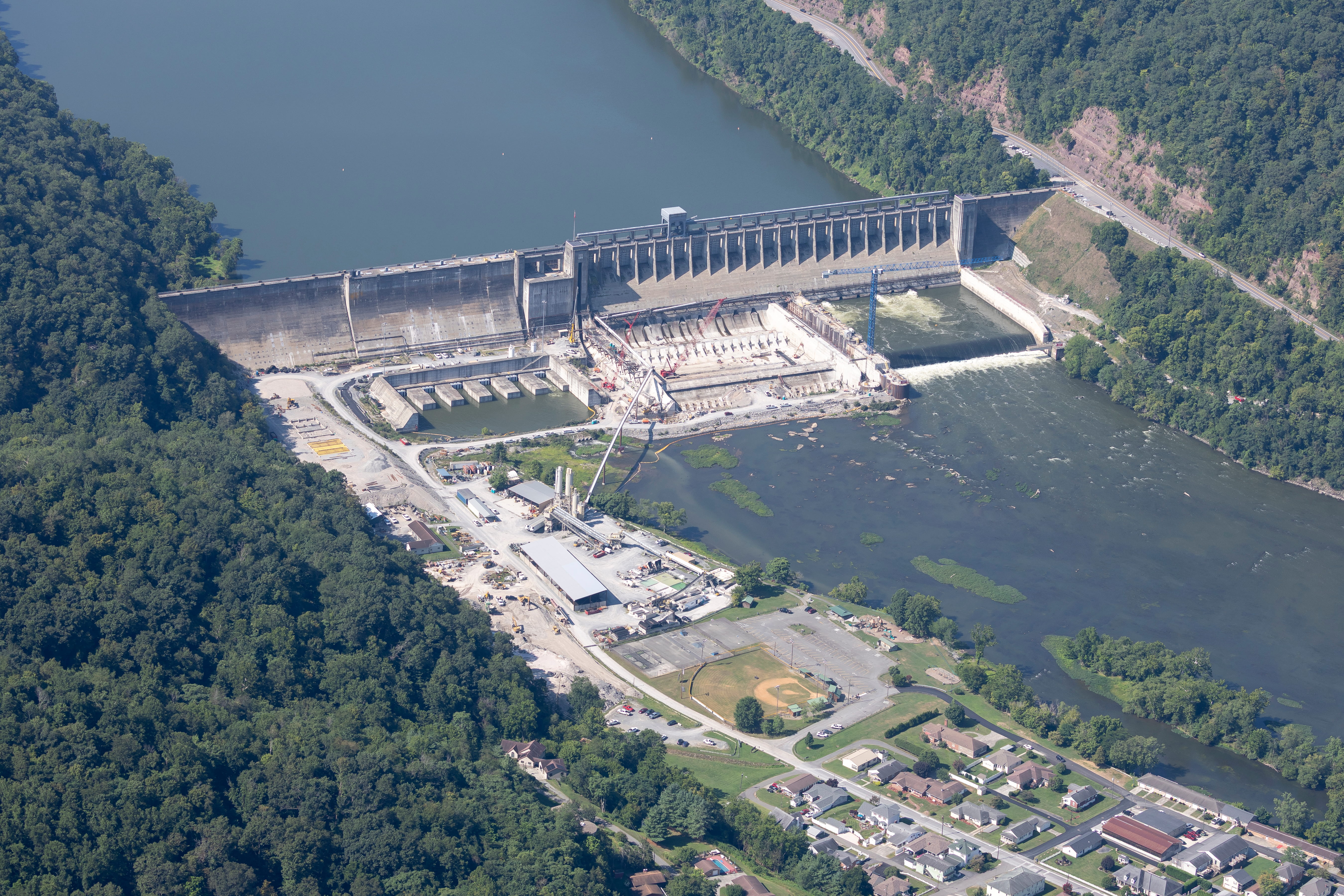
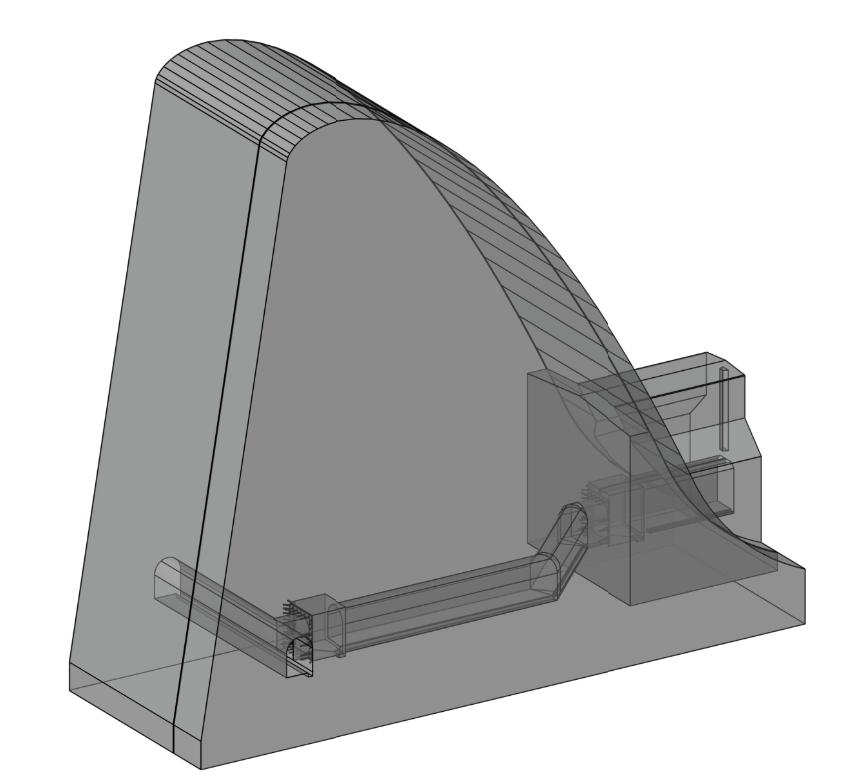
Bluestone Dam, a conventional gravity dam, sits on the New River near Hinton, West Virginia, about half a mile upstream from its confluence with the Greenbrier River. Built by the U.S. Army Corps of Engineers for flood management, a breach at the dam would result in catastrophic flooding in the river valleys. After a Dam Safety Assurance (DSA) report documented potential deficiencies and initiated the DSA Mega-Project, Brayman was awarded multiple phases with a combined value of $530 million.
Project Challenge: Install deep, closely spaced high-capacity rock anchors through an existing dam containing inspection galleries, foundation drains, mechanical systems, gate-control infrastructure, penstocks, and other embedded features.
Anchor Scope: During Phase 2B of the Bluestone Dam Safety Assurance Mega-Project, Brayman installed 212 high-capacity anchors ranging from six to 61 strands and extending to depths of approximately 275 feet. Brayman later installed approximately 1,150 additional anchors for Phase 5 stilling-basin improvements, as well as four high-capacity anchors to support cofferdam construction.
Technical Approach: At Bluestone, drilling accuracy was directly connected to constructability and risk management. Closely spaced anchors extended hundreds of feet through complex existing infrastructure. Even a small deviation near the drill collar could result in a significant offset at depth, increasing the risk of intersecting an adjacent borehole, an existing anchor, or an embedded dam feature.
To meet a specified alignment tolerance of 1:150, Brayman developed a real-time optical directional drilling system to monitor and correct the pilot-hole trajectory during drilling. Following completion of the pilot hole, the borehole was reamed to its required diameter and surveyed to verify alignment.
The project also incorporated specialized tendon installation, controlled grouting, automated stressing, data acquisition, and project-specific anchor testing.
Result: Brayman’s anchor work supported phased dam safety modifications intended to improve the structure’s stability and long-term performance while managing the risks associated with deep drilling, tight anchor spacing, and complex subsurface geometry.
Robert S. Kerr Dam Spillway Stabilization
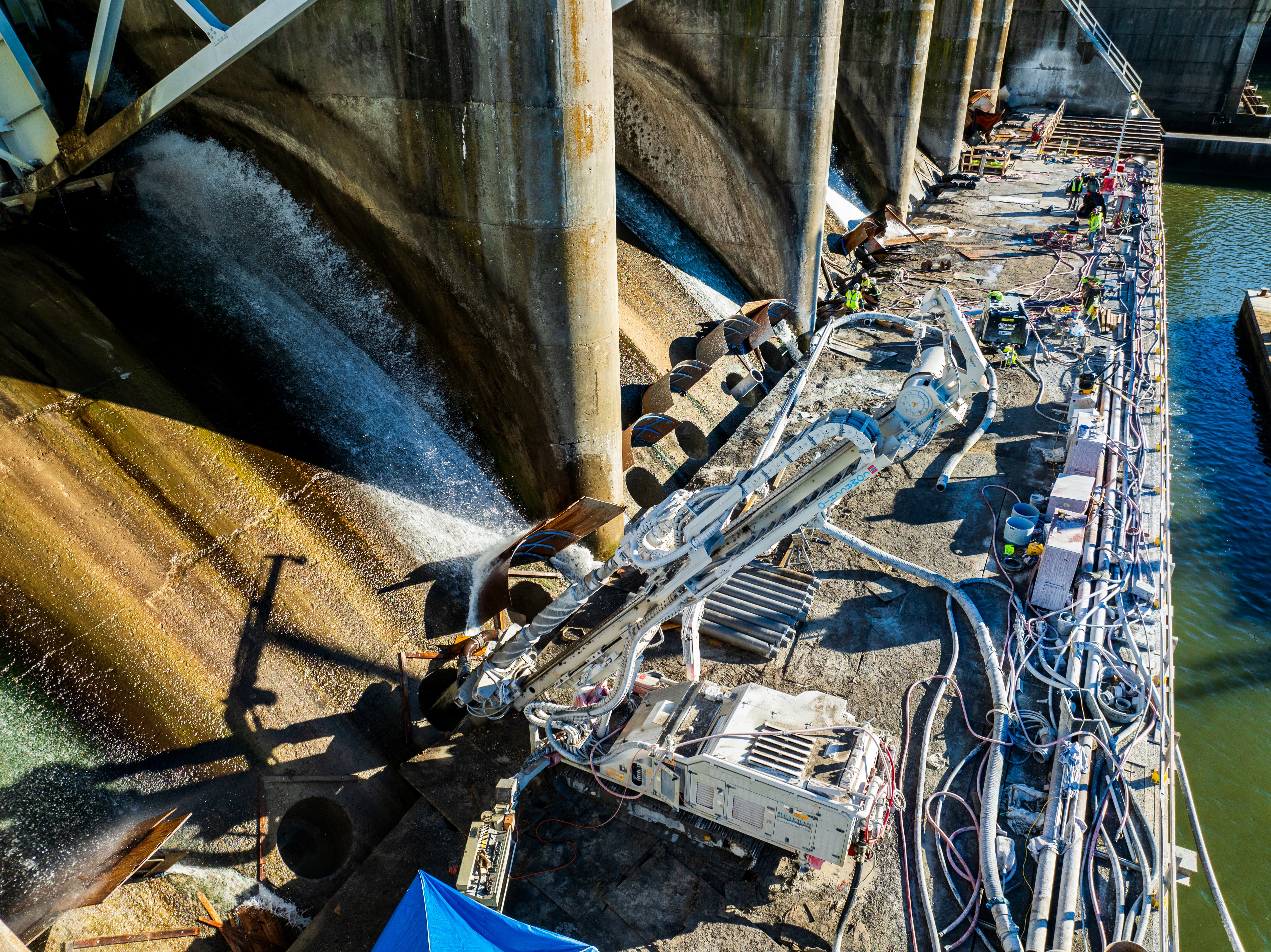
Robert S. Kerr Dam (Kerr Dam) in Mayes County, Oklahoma has been in operation for over 60 years. Brayman was responsible for installing rock anchors to provide additional stability to the spillway and improve overall dam safety.
Project Challenge: Improve the stability of a spillway structure that had been in operation for more than 60 years and support the restoration of normal flood-control operations. All of the anchors were installed in an active spillway under tight schedule constraints to avoid impact to dam operations.
Anchor Scope: Brayman installed one pre-production post-tensioned rock anchor at the top of the dam and 48 post-tensioned anchors across the downstream face of the spillway. Individual anchor tendons contained between 36 and 57 strands.
Technical Approach: The project required high-capacity drilling, multi-strand tendon installation, controlled grouting, stressing, testing, and quality verification across the existing spillway structure.
Result: The completed anchor system added more than 81 million pounds of post-tensioning force to the spillway structure. The project’s completion allowed the Grand River Dam Authority to restore the flood control operations to normal.
Bagnell Dam Stabilization
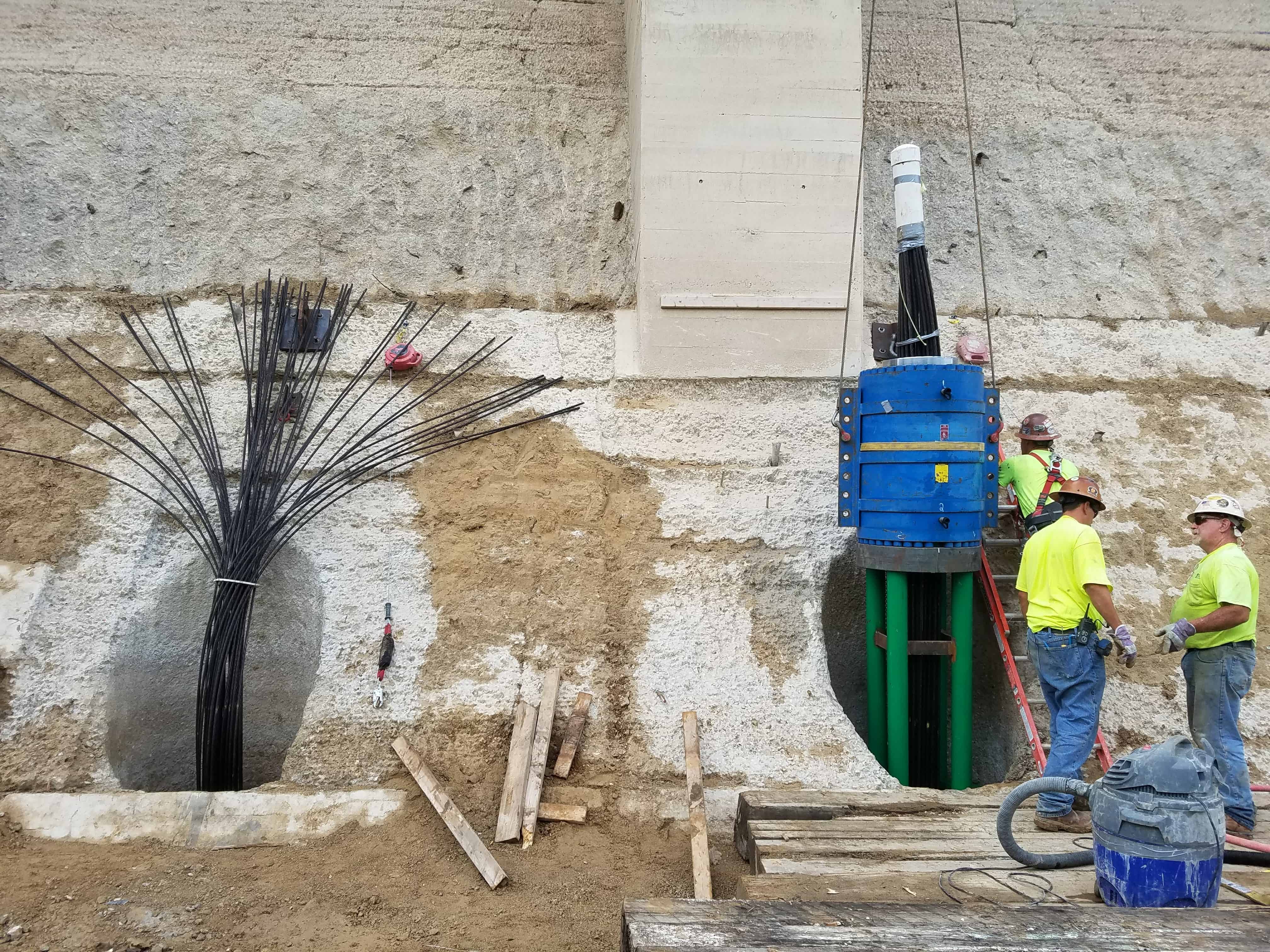
The Bagnell Dam is a 148-foot-tall concrete gravity and hydro power dam in Lake of the Ozarks, MO. After an inspection, engineers discovered that the capacity of previously installed anchors could not be guaranteed. A structural upgrade project was launched to stabilize the dam and ensure long-term reliability.
Project Challenge: Strengthen a 148-foot-tall concrete gravity and hydroelectric dam after evaluations determined that the capacity of previously installed anchors could not be confirmed. A majority of anchors were installed in an active spillway under tight schedule constraints to avoid impact to dam operations.
Anchor Scope: Brayman installed 68 high-capacity post-tensioned rock anchors along the downstream face of the dam. The anchors ranged from 46 to 60 strands and were approximately 127 feet long. To protect from corrosion, the anchor heads were encased in concrete. Overall, the Team installed 365,000 linear strand feet of anchors.
The project also included approximately 175 foundation drains.
Technical Approach: Anchor work was performed from a specialized access platform extending approximately 520 feet across the spillway. The platform supported the drilling, tendon installation, grouting, stressing, testing, and material-handling operations required to execute the work across the dam face.
Following installation and acceptance, the anchor heads were encased in concrete to support long-term corrosion protection.
Result: The high-capacity anchor program supported structural upgrades intended to improve dam stability and provide greater confidence in the structure’s long-term performance.
Advancing Dam Anchor Construction Through Field Innovation
Dam anchor construction requires more than the ability to install a tendon and apply load. It requires the ability to identify field challenges, understand how construction variables may affect anchor performance, and develop practical solutions that improve precision, consistency, quality, and verification.
Brayman’s experience has contributed to advancements in directional drilling, automated stressing, anchor-test data acquisition, grout-performance evaluation, and long-term load-management systems.
Directional Drilling for Deep, Closely Spaced Anchors
At Bluestone Dam, anchor holes extended hundreds of feet through a structure containing inspection galleries, foundation drains, mechanical systems, penstocks, and other embedded infrastructure. Anchor spacing at some locations created limited tolerance for borehole deviation.
To meet tolerances of 1:150, Brayman used a real-time optical directional drilling system that allowed crews to monitor and correct the pilot-hole trajectory during drilling. Completed holes were surveyed before acceptance to verify alignment. This approach helped reduce the risk of intercepting adjacent anchors or existing dam features.
Automated Anchor Stressing and Data Acquisition
Creep testing is used to evaluate time-dependent anchor movement under sustained load and provide information about bond-zone performance. However, long multi-strand tendons may exhibit time-dependent behavior of their own. Manual hydraulic-pressure control and manual data collection can introduce additional variability into the testing process.
Drawing on field experience at Bluestone Dam, Brayman supported the development of an automated stressing and data-acquisition system to autonomously hold creep test loads and record data. By reducing manual variability, this automated approach provided a clearer understanding of how anchors behave during stressing, and helped project teams more clearly evaluate anchor response during acceptance testing.
Evaluating Type IL Cement for Post-Tensioned Anchor Grout
As cement suppliers transitioned from Type I/II cement to Type IL cement during work at Bluestone Dam, Brayman and project partners evaluated how changes in cement composition could affect anchor-grout performance.
Testing considered properties including bleed, flow, viscosity, density, pH, setting characteristics, admixture compatibility, and strand-to-grout bond strength.
The work reinforced an important construction consideration: Type IL cement should not automatically be treated as a one-for-one replacement for Type I/II cement in post-tensioned anchor grout. Changes in cement chemistry may require project-specific testing, mix-design modifications, and performance verification to confirm that grout requirements are achieved.
Our work has also supported advances in anchor testing and verification. At Chickamauga Lock and Dam, the Team installed five 61-strand anchors with an innovative de-stressing system designed to address concrete growth caused by alkali-aggregate reaction. The system uses a threaded anchor wedge plate, coupler, pulling bars, and hydraulic jack to lift the anchor head and adjust the load across all strands simultaneously. This allows for future load monitoring and adjustment as conditions change over the life of the structure. The successful demonstration at Chickamauga is believed to be the first time an anchor of this size was lifted off by this method in the United States.
Together, these innovations reflect Brayman’s practical, field-driven approach to dam anchor construction. Brayman brings technical insight, quality controls, and problem-solving experience needed to strengthen critical dam infrastructure for decades to come.
Related News

Blog title heading will go here


Get in Touch
Interested in Partnering or Joining Our Team? Connect with us to explore opportunities for collaboration and career growth at Brayman Construction.

